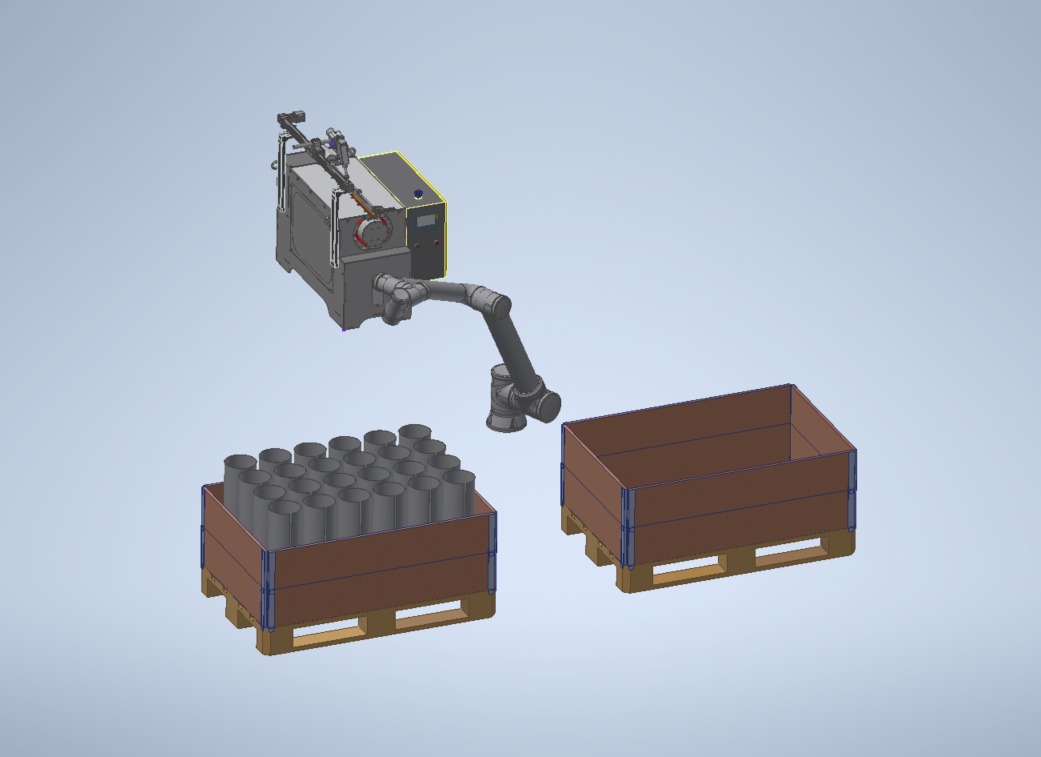
A step-by-step framework for justifying automation spend — from cycle-time savings and scrap reduction to labor reallocation and payback period.
Investing in a robotic welding cell is one of the highest-ROI moves a fabrication shop can make — but only if you run the numbers first.
Step 1 — Baseline your current state. Document cycle time per part, reject/rework rate, and fully-loaded labor cost per weld station. Most shops underestimate the true cost of manual welding by 30–40% once you factor in training, turnover, and inconsistency.
Step 2 — Model the automated state. A well-programmed robotic cell typically achieves 85–95% arc-on time vs. 20–30% for a manual welder. That alone can 3–4× your throughput per station.
Step 3 — Calculate payback. Total investment (cell + integration + training) divided by monthly net savings. For most mid-volume shops, we see payback periods of 4–8 months.
Step 4 — Factor in the intangibles. Reduced dependence on skilled labor, improved weld consistency, and the ability to reallocate experienced welders to complex jobs that truly need human judgment.
The bottom line: if you're running more than 50 identical welds per day, automation almost certainly pencils out. We're happy to run the numbers with you — reach out via our contact form.